Thursday, 3 July 2014

Ask The Expert Marathon Running-Beginners Lets Prepare You Your Complete Guide

Running a marathon is an incredible goal for runners, but marathon training and the race itself is not something easy. While I think that any healthy individual who is willing to commit to the training can complete a marathon, I don't recommend that runners jump right into the marathon distance (26.2 miles or 42 K). If you've never trained for any kind of endurance event, you should work on building your running base mileage for at least six months before you start thinking about participating in a marathon.
Once you've established a regular running habit and are running 3-4 days a week, it's a good idea to by racing a shorter distance race, like a 5K (3.1 miles) or a 10K (6.2 miles)Getting some race experience is good preparation for your marathon and will get you excited to start your training.

How to Get Started with Marathon Training

Medical check-up: Even if you've already been running,Get a general checkup with the doctor and let him or her know your plans to train for and run a marathon.

Running shoes, clothes, and gear: While you don't need to buy lots of expensive gear, the right running shoes  is an important investment. Getting running shoes that are suitable for your running style, foot type, and level of experience will help you run comfortably and injury-free. Finding the right sports bra  is also very important for women to stay comfortable while running. Wearing running clothes made of technical fabrics (not cotton) that wick away your sweat and help you keep comfortable.Also a good water bottle is important.

Nutrition and Hydration for Marathon Training and Running
If you already eat a healthy diet, you don't have to make too many changes when you start training for a marathon. The diet recommendation for marathon runners are not that different than nutritional guidelines for non-runners.
Pre-run eating: It's important to make sure that you're properly fueled for your runs to get the most out of them. Try to eat a snack or light meal of about 250-300 calories about 1 1/2 to 2 hours before you start running. Eating immediately before running may lead to cramping, and running on an empty stomach may cause you to run out of energy.
Choose something high in carbohydrates and lower in fat, fiber, and protein. Some examples of good pre-workout fuel include: a bagel with peanut butter; a banana and an energy bar; or a bowl of cold cereal with a cup of milk. Avoid rich, very fatty, or high-fiber foods, as they may cause gastrointestinal distress.

Post-run eating: After running, especially a long run, you want to replenish energy as quickly as possible. Studies have shown that muscles are most receptive to rebuilding glycogen (stored glucose) stores within the first 30 minutes after exercise. If you eat soon after your runs, you can reduce muscle stiffness and soreness.
You'll want to consume primarily carbs, but don't ignore protein. A good rule of thumb for post-run food is a ratio of 1 gram of protein to 3 grams of carbs. Nutrition bars, such as Power bars or Luna bars, are convenient options. Other examples would be a bagel with peanut butter or a smoothie made with fruit and yogurt.

Long run nutrition: Long runs have special nutrition and hydration requirements  so make sure you're prepared heading into your long runs. For example, you'll need to make sure  replace sodium lost through sweat during runs longer than 90 minutes.
You'll also have to consume calories since you'll be burning through your glycogen storage. A basic rule of thumb is that you should be taking in about 100 calories after about an hour of running and then another 100 calories every 40-45 minutes after that. You may need more depending on your size and speed, so make sure you plan to carry extra food or gels. If you're feeling hungry or low on energy, you can definitely eat "off-schedule".
Nutrition and hydration are critical to training for and running long distance races such aS HALF AND FULL MARATHON RUNNERS. A runner's diet is important not only for maintaining good health, but also to promote peak performance. Here are some basics about running nutrition and hydration, including what, when, and how much to eat and drink.

It's important To eat before running to make sure you're properly fueled. A runner's diet is important not for only maintaining good health, but also to promote peak performance. Here are some of the best foods to help runners achieve a healthy diet.

1. Whole Grain Pasta and Bread -Why It's Good for Runners: Runners need plenty of carbohydrates to fuel workouts, and breads and pasta are obvious choices. But, let's face it, not all breads and pasta are created equal. Whole grain foods are less processed and therefore contain more of the natural nutrition found in the grain, including more fiber. So, as compared to white pasta and bread, you'll get more nutrients from whole grains and the increased fibre will help you feel fuller longer 

2. Eggs-Why They're Good for Runners: One egg satisfies about 10 percent of your daily protein needs, and the amino acids in eggs will help with muscle repair and recovery. You'll also get about 30 percent of your recommended amount of vitamin K, which is crucial for bone health.


3. Beans-Why They're Good for Runners: Cooked dry beans like pinto, lentil, garbanzo, and split pea are high in protein and fiber, a plant source of iron and low in fat.


4. Salmon-Why It's Good for Runners: Salmon is an excellent protein source, but it's also one of the best food sources of omega-3 fats, essential for brain development and function. Omega-3s also assist in the prevention of heart disease and high blood pressure. Salmon also has protein, vitamins A, B and D as well as a range of minerals vital to a balanced and healthy diet.


5. Sweet Potatoes-Why They're Good for Runners: Sweet potatoes contain the always-important carbs and are an excellent source vitamin A, a powerful antioxidant. They're also a good source of vitamin C, potassium, iron.


6. Low-Fat Yogurt-Why They're Good for Runners: Sweet potatoes contain the always-important carbs and are an excellent source vitamin A, a powerful antioxidant. They're also a good source of vitamin C, potassium, iron.


7. Bananas-Why They're Good for Runners: A good source of carbs, bananas also contain potassium, which runners lose through sweating and help regulate muscle contraction and prevent cramping. Bananas are also considered a "safe pre run "because they're unlikely to cause gastrointestinal issues.


8. Peanut Butter-Why It's Good for Runners: Peanut butter is tasty and satisfying, which makes it a great food for runners who are trying to lose weight. The protein and fiber in peanut butter helps you feel full and it's not fattening, unless you overeat total calories that day. For example, eating a whole wheat bagel with peanut butter will make you feel fuller than if you ate a plain white bagel. Peanut butter is also a source of protein, needed to build and repair muscles damaged during training.


9-Quinoa-Why It's Good for Runners: For those runners who are bored with pasta, quinoa is a tasty alternative. Quinoa is not only packed with carbs, it's also very rich in protein. A 6-ounce serving of quinoa contains 132 calories, 23 grams of carbohydrate, 4 grams of protein, and 2 grams of unsaturated fat.


Friday, 27 June 2014

Ramadan-Fast,Feast And Fit.Your Fitness Guide During The Holy Month

With Ramadan just around the corner, Muslim bodybuilders are scrambling to figure out how they will maintain their gains during the month.Abstaining from food and drink is what becomes a pain point for bodybuilders.Not only bodybuilders even people who want to stay fit end up losing their stamina and complain of weight gain after ramadan..These two are extreme problems for people who want to stay fit and bodybuilders who want to gain During this month of the Islamic calendar, Muslims fast and abstain from consuming any kind of food or water from dawn until sunset.By resisting the basic ingredients which sustain life, we remember and are thankful for the immense blessings that God Almighty has bestowed on us in our daily lives, something which we often take for granted.

In addition to the physiological benefits of giving rest to the digestive system, this month-long exercise strengthens self-control, patience, tolerance, determination, humility and unity, while allowing us to refocus on how God ordained us to live our lives.
When fasting in summer, the stresses on the body are more extreme. There is less time for eating, praying, and sleeping in the night hours, and completing required tasks during the day can be more difficult due to heat and extended hours without sustenance. Unfortunately, many Muslims in the month of Ramadan end up eating unhealthy foods or overeating and/or by abandoning all exercise due to fasting and time constraints. In addition to getting less sleep, this leads to weight gain, muscle loss, illness, and lack of energy. with careful planning, it is possible to start, maintain, or improve eating and workout habits during the month of Ramadan.Here are some tips that should help you get through the month with ease 

KEEP EXERCISING Don’t use Ramadan as an excuse to have an extraordinarily long break in your workouts. Try exercising either just after suhoor (your first meal) or just after you break your fast. In either scenario you will have relatively higher levels of hydration and energy levels .Don't exercise when you are fasting. One should exercise either before Sehri (meal before dawn) or after Iftaar (meal after sunset)

EAT WELL (WISELY) I know after hours of fasting these letters will actually be a blurr Who wants to hear something like this after 14-15 hours of fasting?..Depending on your household, Ramadan is usually accompanied by fried foods and sweets. To make matters worse, portions are unusually large. The key here is still portion control.Avoid big meals and eat slowly.Avoid deep fried food and red meat as it causes acidity and digestion problems.After breaking your fast try eating smaller meals after every 2 hours.This will not play havoc on your digestive system and eating every 2 hours will gradually provide nutrition to your body and keep your metabolic rate high.

WHEN YOU BREAK YOUR FAST-Though it's tempting to gorge on anything edible in sight once the sun sets, About the worst thing a faster can do is overdose on refined carbohydrates and refined sweets at nighttime.It takes about 20 minutes for a signal to go from your stomach or your G.I. tract to your brain to tell you you’re full,So if you eat very quickly, you’re much more likely to overdo it right when you break fast.The same goes for the pre-dawn meal by breaking  fast with dates and water, milk or watered down fruit juice, before moving on to a light starter such as a broth-based soup and crackers meal.Then, you can have a healthy and balanced meal including a protein, vegetable and ideally whole grain side,while continuing to re hydrate your body with water

DRINK WATER -LOTTT OF IT  Try fitting 4-5 cups when you have your early morning meal, and another 3-4 cups after you break your fast in the evening. This will help keep you properly hydrated.I cannot emphasize the importance of drinking water during ramzan. Water will help you flush your toxins and also 

BRIEF WORKOUTS Take a break from your longer workouts for the month. Keep your workouts brief, between 45 to 60 minutes. With your workouts now shortened, make every inch of movement matter.Cut cardio down to a minimum during Ramadan” and opt for resistance training instead, focusing on compact movements,if opting for cardio go for brisk walking or cross trainer.Timing matters too. “The best time to work out is at nighttime during Ramadan, or before the pre-dawn meal” when your body is well-hydrated

WATCH THE CALORIES This means keeping your caloric consumption the same as your regular consumption levels when it is not Ramadan. This means that if your consumption level was 2,500 calories per day prior to Ramadan, it should remain at 2,500 calories per day during Ramadan

TAKE A MULTIVITAMIN You might find yourself eating a smaller variety of foods. Take your multivitamin to prevent any deficiencies

GET ENOUGH SLEEP With Ramadan being in the Summer, the time between your early morning meal and your iftar (break-fast) may only be 7-8 hours. If you can’t take advantage of that full 7-8 hours between meals, think about taking a power nap during the day. Energy levels will be low due to a lack of food, so you’ll need to leverage the energy you can get from sleep. This can then help drive your workouts 
Happy fasting all my friends Stay blessed and fit always!! :)

Wednesday, 25 June 2014

Muscle Soreness Post Workout Explained! The Science And How To Prevent


As a regular gym goer we all know that sore feeling we love and hate.Yes that sweet pain which is most evident when we have lifted a great deal on leg day or had a fabulous shoulder day.We as fitness fanatics love this sweet pain and are actually disturbed when one day we are not experiencing it.Sometimes this soreness can actually slow down our week ..So what is this soreness How is it caused and how can i prevent it?????Lactic acid is released into the muscles when they have used up their normal energy stores but still have intense energy needs for example Sprinting,Weightlifting and other anaerobic activity. Small amounts of lactic acid operate as a temporary energy source, thus helping you avoid fatigue during a workout. However, a build up of lactic acid during a workout can create burning sensations in the muscles that can slow down or halt your athletic activity. For this reason, it may be desirable to reduce lactic acid build up in the muscles. In this article i will show you how 
Understand that lactic acid does not cause muscle soreness after a workout.Lactic acid is often wrongly accused of being responsible for the post-workout muscle soreness experienced 1 to 3 days after a hard workout. However, new research shows that lactic acid (which operates as a temporary fuel source during intense physical activity) washes out of the system within an hour of the end of a workout, so it cannot be responsible for the pain felt days later.
  • The latest theory suggests that this muscle pain -- also known as delayed onset muscle soreness or DOMS -- is the result of damage to the muscle cells during intense exercise. This causes inflammation, swelling and tenderness as the muscles repair themselves.
  • Understand that lactic acid causes the burning sensation during a workout.
  • On the other hand, built-up lactic acid is responsible for the burning sensation you experience while pushing yourself hard during a workout.
    • Usually, the body uses oxygen to produce energy in the body. However, when you push yourself hard during a workout, your body requires energy faster than your body can produce it using aerobic methods.
    • When this happens, your body uses anaerobic methods to produce energy, as it can do this much faster than with aerobic methods. Lactic acid - or lactate - is a byproduct of these anaerobic energy production methods.
    • Your body can continue to produce energy anaerobically for up to three minutes. During this time, levels of lactic acid in your muscles begin to increase rapidly, which leads to the burning sensation you associate with intense physical activity.
    • After 3 minutes, the lactic acid begins to slow down the muscles, warning your body that it is close to its physical limit. In this way it operates as a defense mechanism, protecting you from injury and fatigue.
    • Even though small quantities of lactic acid are necessary and even good for your body in certain circumstances, it is still necessary to prevent lactic acid levels from building up too quickly. If you don't, you will find it hard to work out comfortably or to the best of your ability.
    • Reducing lactic acid build up -- though it won't prevent DOMS - will help you to Stay hydrated. Lactic acid is water soluble, so the more hydrated you are, the less likely you are to feel a burn while you workout and cause lactic acid build up.
      • Drink plenty of fluids while you work out. By the time you notice you are thirsty during a workout, you may already be dehydrated.
      Breathe deeply. The cause of the burning sensation you feel in your muscles while exercising is twofold: it is partly due to the build up of lactic acid, but it is also due to a lack of oxygen.
      • You can ameliorate this by paying close attention to your breathing while you exercise. Be sure to breathe deeply in and out, at an even pace. Try breathing in through your nose and out through your mouth.
      • This will help to deliver oxygen to your muscles and stop the production of lactic acid
      • Work out frequently. The more physically fit you are, the less glucose your body will need to burn and there will be less acid build up.
        • You should try to work out several times a week, but make sure to take at least one or two rest days to allow your muscles to recover.
        • Increase the intensity of your workouts gradually. Develop a workout plan to add minutes or repetitions slowly to your routine - this will gradually raise the level at which your body starts to produce lactic acid.
        • Be cautious when lifting weights. Weight lifting is an activity that tends to promote lactic acid build up because it requires more oxygen than our bodies can deliver.
        • Although we have been told to "feel the burn," a build up of lactic acid may also lead to micro-tears that can cause trauma in the muscles and leave you sore for days.
          • Be sure to increase the weight and repetitions gradually to keep healthy levels of lactic acid in the body.
          • Sretch after your workout. Since lactic acid disperses 30 minutes to an hour after your workout, stretching helps to release lactic acid, alleviating any burning sensations or muscle cramps you might be experiencing.
          • Stretch your muscles lightly follow any intense exercise, and also use your fingertips to massage the area gently.This will also decrease any micro-trauma that may be responsible for soreness in the days following a workout.

Friday, 20 June 2014

Green Tea-Whats The Hype????

We all love a cup of tea. In fact British people sip, on average three-and-a-half cups each day.I DRINK TEA 


For the love of the taste and also if i dont drink my 2 cuppas of  tea a day i get moooody Hmmmm!!! I drink it because I’m told it’s good for me-You know mums words also in this coffee generation m a tea person…or, to be honest, the real reason I drink it is because I believe it help keeps my weight in check. But recently I decided to look into it a bit deeper and see what are all these other benefits of green tea 
Why Green Tea?
Green tea has been used as a medicine for thousands of years, originating in China but widely used throughout Asia this beverage has a multitude of uses from lowering blood pressure to preventing cancer. The reason that green tea has more health benefits attached to it than black tea is (apparently) due to the processing. Black tea is processed in a way that allows for fermentation whereas green tea’s processing avoids the fermentation process. As a result, green tea retains maximum amount of antioxidants and poly-phenols the substances that give green tea its many benefits.


Swap black tea for green

'Although black and green tea come from the same plant, green tea is less processed and therefore contains more simple flavonoids called catechins,' 
'These protect your body from free radicals that can damage your body's cells and have also been linked to cancer and ageing.'
In fact, around 30 per cent of the weight in freshly picked tea leaves is catchins.
Leaves used to make black tea are fully oxidised, whilst those for green tea or white tea are lightly steamed, which helps to preserve important vitamins and minerals
Experiment with different types of green tea to find a taste you like. You may enjoy green tea flavoured with ginger or jasmine flowers, which provide a delicate, fragrant taste.
Blood Pressure. Regular consumption of green tea is thought to reduce the risk of high blood pressure.
Depression. Theanine is an amino acid naturally found in tea leaves. It is this substance that is thought to provide a relaxing and tranquilizing effect and be a great benefit to tea drinkers.
Anti-viral and Anti-bacterial. Tea catechins are strong antibacterial and antiviral agents which make them effective for treating everything from influenza to cancer. In some studies green tea has been shown to inhibit the spread of many diseases.
Skincare. Green tea can apparently also help with wrinkles and the signs of aging, This is because of their antioxidant and anti-inflammatory activities. Both animal and human studies have demonstrated that green tea applied topically can reduce sun damage
A cuppa helps your teeth-A cup of green tea contains fluoride, which helps preserve your teeth.
'Recent studies have shown that green tea has anti-bacterial properties and helps to combat tooth decay by killing harmful bacteria, like streptococci,Try switching from drinking fizzy drinks to green tea.

Strokes, diabetes and cancer

 'Green tea can lower your blood pressure by helping to relax your blood vessels.
'Its' antioxidant properties reduce harmful LDL cholesterol – that causes heart disease. Studies have shown that flavonoids in green tea possess anti-inflammatory properties, which protect against diabetes stroke and cancer

Keeps you slim

'Drinking green tea can help you lose weight because it has zero calories and helps to increase your energy expenditure,' 'If you're dieting, try substituting semi-skimmed milk for full fat and save about 21 calories per cup. Don't add sugar.Tea is the lowest calorie beverage you can get and it helps keeps hunger at bay
'Although drinking tea with milk reduces the action of flavanoids, it provides the main source of calcium for women over forty,'If you do choose to drink your tea without milk, try adding a slice of lemon to give a little zing. The fruit is full of vitamin C – which is important for healthy skin, bone and teeth and a strong immune system.

Tuesday, 17 June 2014

Ask The Expert- Ditch These 7 Habits And Have A Great Waistline

We all want tips to know how to lose fat from the midsection..We all want 6 packs at least 4 or a 26 inch waist.With so much information available it is but obvious to get confused.In this article im taking you to the basics and keeping it simple.Only when you know the habits that cause belly fa\at can you avoid it and then half your battle is won.Some of them are so obvious that just by avoiding those things you could do great.Let me remind you there is nothing like spot reduction AKA if you want to lose weight just from the abs that is humanly not possible but what you can do is follow a great diet alongside do core exercise and AVOID these habits and you will see a trimmer torso.Are you ready?


1. DONT Drink Carbonated Drinks Regularly
Can’t last a day without gulping down a can or two of soda? If this is you, then you’re certainly not being kind to your body. According to researchers, consuming one or two cans of soda daily causes your waistline to increase at least five times faster than those who barely drink soda in the course of a week. The concept behind this is that the high amount of sugar used in sodas trigger your craving for food, so you end up eating more than you should during mealtimes. Diet sodas aren’t any better than regular varieties since these contain artificial sweeteners, which can increase your appetite as much as sugar does. So if you have that serious craving for a satisfying drink, opt for healthy smoothies, fresh fruit juices, or a glass of water with lemon zest and mint leaves. You’re doing your body and overall health a favor by choosing a more nutritious drink that’s also low in sugar content. Since soda only causes you to add pounds without quenching your thirst, why bother drinking it, right?
2. DONT use a Larger Plate Each Time You Eat
Whether it’s a buffet dinner or just a regular meal at home, pay attention to the size of plate you use at mealtime. In a survey conducted among obese individuals, it was discovered that these people prefer larger plates over smaller or medium-sized ones. With a large plate size, they have more space for their food. So, how does this habit cause belly fat? Simple. When you have a larger space to pile up your food, you tend to consume more than your body needs, and that leads to more fat stored in your body. To avoid this nasty chain reaction, make it a point to use smaller plates and resist the urge to eat or go back for seconds when you’ve already had enough.
3.DONT eat a very late dinner 
While it’s true that your body naturally burns some flab as you sleep, it might not be able to efficiently do so when you go to bed on a full stomach. Aside from causing belly fat, eating late and reclining on a full stomach increases your risk of developing acid reflux and indigestion, since gravity is no longer able to pull everything in your tummy straight down. To prevent these conditions, consider eating smaller meals at night and don’t lie down for at least three hours after dinner. If possible, just snack on fruits in case you feel a bit hungry at night instead of raiding the fridge for sweet desserts to satisfy your craving.
4. DONT eat  When Sad, Angry or Upset

Do you find yourself eating absent-mindedly when your emotions are at their peak? The next time you catch yourself doing this, try to snap out of it before you end up eating a double cheeseburger and fries. Emotional eating does nothing to make you feel better. If there’s anything you can get from this habit of eating whenever you’re upset or stressed out, it’s just hideous belly fat. The best way to combat this response to stress is by drinking a glass of water, talking to a friend, or taking a relaxing walk. Choose an activity that doesn’t involve eating, so you can stop yourself from loading up on extra calories when you’re feeling emotional.
5. DONT keep consuming low fat foods
Some people assume that high-fat foods and drinks lead to more fat storage in your belly. The truth is, monounsaturated fats are not bad for you. If anything, foods such as avocados, olive oil and seeds work well in eliminating belly fat. Be wary of too many low-fat foods, since manufacturers often add sugar to these items. And you know what that means – the more sugar you have in the body, the greater your chances of storing more body fat
6. Depriving Yourself of Sleep
Ideally, adults should get about seven to nine hours of sleep each night. When you fail to get enough sleep, your level of cortisol (stress hormone) increases and causes you to crave sugary foods. With that in mind, it’s harder to get rid of belly fat when you keep the habit of not getting enough sleep regularly. To maintain normal levels of the stress hormone cortisol, try your best to attain the recommended hours of sleep every night. This way you can balance your cortisol levels while boosting production of leptin, a type of hormone that causes you to control your appetite.
7. DONT neglect protein in your diet
Have you been depriving your body of protein-rich foods? Generally, healthy adults should consume at least 20 to 25 grams of protein in each meal, although this depends on your activity level and body size. Men in particular should get an additional 10 grams of protein with every meal to ensure excellent health. By increasing your protein intake, you can balance out your blood sugar while reducing insulin levels to promote a faster metabolic rate. What’s more, protein helps control hormones that increase your appetite, so you can slim down naturally. To power up your daily meals, consider eating high-protein foods such as ricotta cheese, shellfish, turkey, skinless chicken, salmon and eggs. These are your best options because of their low fat and high protein content – a great combination for slimming down and shaping up!
So are you ready to say hello to a flatter tummy and a more gorgeous body? Just be sure to avoid these seven bad eating habits, and you can be on your way to improving your body size and overall health.

Friday, 13 June 2014

Monsoon Special-Tips To Stay Fit

With the monsoons almost here, let's alter our food and lifestyle habits according to the season to stay at our healthiest best.


Diet
 Stick to seasonal fruits and vegetables For instance, eat mangoes only till the season lasts, not till the end of rains.
  • During the monsoons, stick to soups and stir fried or cooked steamed veggies instead of raw salads.
  • To avoid stomach ailments and other water-borne diseases, avoid eating street food.
  • You must carry water from home when you head out or insist on packaged drinking water.
  • To keep immunity high, eat fruits and veggies high in vitamin c, beta carotene and iron (carrots, beets, lime, amla, dates).
  • Add ginger and garlic to your cooking to keep sniffles at bay and stomach ailments down.
  • Avoid eating bhel,pani puri,or any thing that could probably be uncooked.This can play havoc on your stomach.Eat cooked ingredients as germs are killed during the whole cooking process
  • Avoid binging on fried foods (pakoras, chips, namkeens, samosas,etc) as far as possible. Moderation is the key word here.
  • Snack on the grilled buttas/makkai/corn that seem to pop up everywhere with the rains. Nothing smells better than corn being roasted over hot coals on a rainy day, besides the fiber makes it an excellent healthy snack.
Exercise
  • It is not advisable to swim during the monsoons, unless you have a private pool and have been doing it since long to avoid water-borne infections.
  • Head to the gym for safe indoor workouts during this season.
  • Once the heat goes down, our thirst signals go down too. But you must consciously attempt to keep hydration levels optimum by drinking enough water.Even if you are not thirsty does not mean your body does not need water.Stick to 12 gllasses a day.The best measure that you are drinking enough water is your pee should be clear or pale yellow  Not dark yellow .When you pee you get rid of chemicals that your body doesn't need any more. It's like with the trash you throw away
  • If you  heading out for a walk or run, make sure you wear footwear that not only prevents skidding and slipping, but also from water seeping in.

Bottomline - keep in sync with nature’s cyclical changes. Enjoy the monsoons! :-)

Thursday, 12 June 2014

World Cup Exclusive 9 Hottest,Strongest, Fittest Who Is Your FITTEST PLAYER?

Let the hot and sweaty action begin!The best soccer players in the world will battle it out for their countries in the 2014 FIFA World Cup, which has begun  and not only are these guys extremely athletic and talented (duh ofcourse they are), they're also some of the sexiest men on the planet!Here are my fav 9  
Cristiano Ronaldo
The Portuguese has a body that looks like it has been sculpted from stone. His former power development coach Mike Clegg described him as the perfect specimen. ‘From his height to his natural body type, muscular structure, how much fat he’s got in his system, his endurance capacity, flexibility, power and strength – they are in perfect balance,’ he said.

Lionel Messi
Ronaldo’s great rival Lionel Messi might not have his sculpted physique but there’s no denying that he’s fit beyond measure, though he has suffered from some injury setbacks this year. His speed, acceleration, agility, balance and composure on the field is downright frightening and his personal battle with Ronaldo for the greatest player ever tag has defined football for this generation. And to think this is a lad who had a growth hormone deficiency as a child!


Sergio Ramos
The Real Madrid defender has graced the cover of the Spanish edition of Men’s Health and has one of the most enviable bodies in world football. Integral to Spain’s astounding trophy haul in the international game, the defender is an integral part of the Spanish national team and just led Real Madrid to their 10th European Cup.

                                                  GERAD PIQUE

 Shalira's  man, Gerard Piqué of Spain, also heats up the pitch with his rock-hard body and smoldering stare. Talk about one lucky girl!

                               Steven Gerrard

How partial am i towards him ??Steven Gerrad English Footballer Who plays For and captains both premier League Club Liverpool and the England National Team Born 1980 this 34 year old makes heads turn Definitely the hottest player giving the younger ones run for their money!

                              Robin van Persie

This dutch footballer who plays striker for manchester united and is the captain of Netherlands National Team makes the girls gooo swoooning over him with his perfectly sculpted body. In 2013, he was ranked 11th In The Guardian newspaper's 100 Best Footballers in the world and he definitely tops my list 


                                                  Neymar 

The 22-year-old Brazilian carries the weight of expectation of 200 million home fans.Neymar – he is known only by his first name – is hailed as the best brazilian soccer player  to have emerged in the last decade and his dazzling skills are considered indispensible to Brazil’s chances to bag the World Cup for a record sixth time

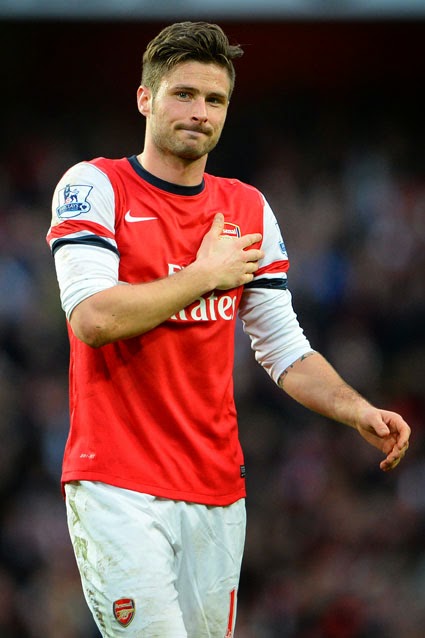
                                                       Olivier Giroud
 French footballer  who plays for English club Arsenal and in the Premier League  and the France National Team . He plays as a Striker  and is known for his size, physical style of play, heading ability, shot power, strength and link-up play

Diego Forlán
Veteran Uruguay striker Diego Forlan was back in training on Thursday following a stomach bug that kept him off the practice. The 35-year-old born into a family of footballers – his father Palbo having played for Sao  Paulo and Uruguay and 1974 world cup  and his maternal grandfather, Juan Carlos Corazzo, for Independiente in Argentina.Keeping up with the family tradition this striker sure keeps things hot on the pitch